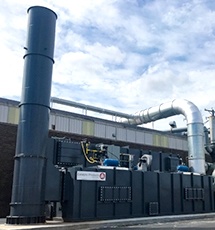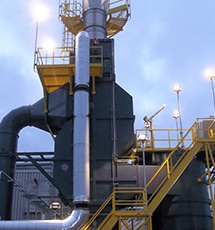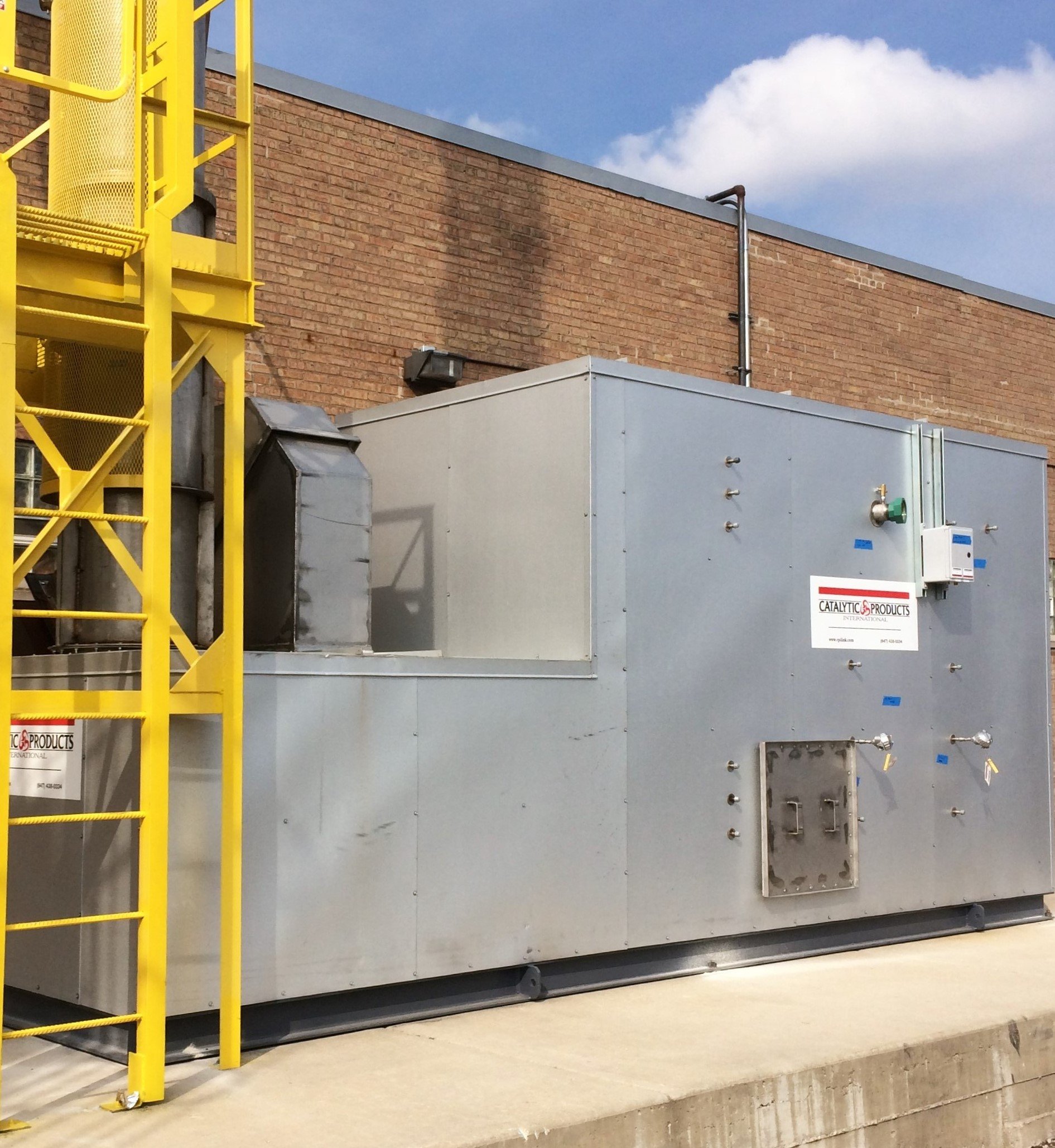
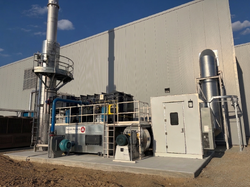
Catalytic Products International (CPI) supplied and installed a 6,000 SCFM TRITON 6.95 Regenerative Thermal Oxidizer for control of VOC emissions from an electrodeposition coating oven at a Midwest USA automotive manufacturing facility.
The highly efficient regenerative heat-recovery design reduces supplemental burner demand while supporting the facility’s air-emissions control objectives.
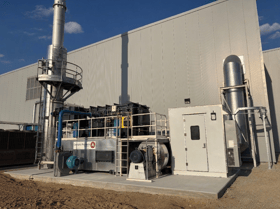
- Process Type: Electrodeposition coating line (E-Coat)
- VOC: Automotive Part Coatings
- Air Volume: 6,000 scfm
- Control Type: Regenerative Thermal Oxidizer (RTO)
- Destruction Rate of Efficiency (DRE): 98%
- Installation: RTO, Exhaust Stack, Control House, startup support.
Solution Provided
CPI supplied a TRITON Regenerative Thermal Oxidizer designed specifically for the e-coat oven exhaust stream.
The system uses regenerative ceramic heat-exchange media to capture thermal energy from the treated exhaust and transfer that energy to the incoming process air. This design allows the RTO to maintain the required oxidation conditions while reducing the amount of supplemental energy required from the natural-gas burner.
The RTO was designed for:
- 98% VOC destruction efficiency
- 95% thermal efficiency
- Continuous treatment of the e-coat oven exhaust
- Integration with the facility’s process and control systems
- Long-term industrial operation with efficient heat recovery
How the RTO Works
VOC-laden process air enters the RTO through a ceramic-media heat-exchange bed. Heat retained in the ceramic media raises the temperature of the incoming air before the air reaches the combustion chamber.
Inside the combustion chamber, the VOCs are exposed to elevated temperature, oxygen, and sufficient residence time. Under these conditions, hydrocarbons are oxidized, primarily forming carbon dioxide and water vapor.
The hot treated gas then passes through a second ceramic-media bed. The media captures much of the thermal energy before the exhaust is discharged. Airflow periodically reverses between the media beds, allowing the RTO to recover and reuse heat continuously.
This regenerative cycle provides several operational advantages:
- High heat recovery: Thermal energy from the treated exhaust preheats the incoming process stream.
- Reduced burner demand: Recovered heat reduces the need for supplemental natural gas.
- Stable emissions control: Automatic poppet valve sequencing and temperature monitoring support consistent treatment conditions.
- Efficient industrial operation: The regenerative design combines high VOC destruction performance with lower energy demand than lower-efficiency thermal oxidation configurations.
Project Scope
CPI’s project scope included:
- TRITON 6.95 Regenerative Thermal Oxidizer
- Installation of RTO on a customer-supplied concrete foundation
- RTO exhaust stack
- Coordination with the EPC firm and facility team
- Installation and system-integration support
- Fresh-air startup activities
- Technical assistance for process start up and initial operation.
CPI worked with the project stakeholders to coordinate equipment design, fabrication, installation, and startup planning. This collaborative approach supported the integration of the oxidizer into the facility’s paint-shop infrastructure.
About CPI
Since 1969, CPI has been “Enabling Clean Production™” by delivering innovative, cost‑effective solutions for VOC, HAP, NOx, and odor control. CPI’s systems support customers, including the automotive industry, in achieving air quality compliance while minimizing energy consumption and greenhouse gas emissions.
CPI partners with manufacturers as a trusted resource in resolving the most complex air pollution and energy conservation problems. We provide our customers with innovative and cost-conscious solutions to their most complex VOC, NOx, and Odor pollution challenges.