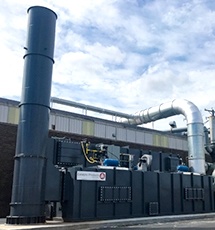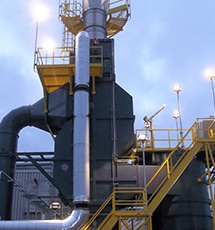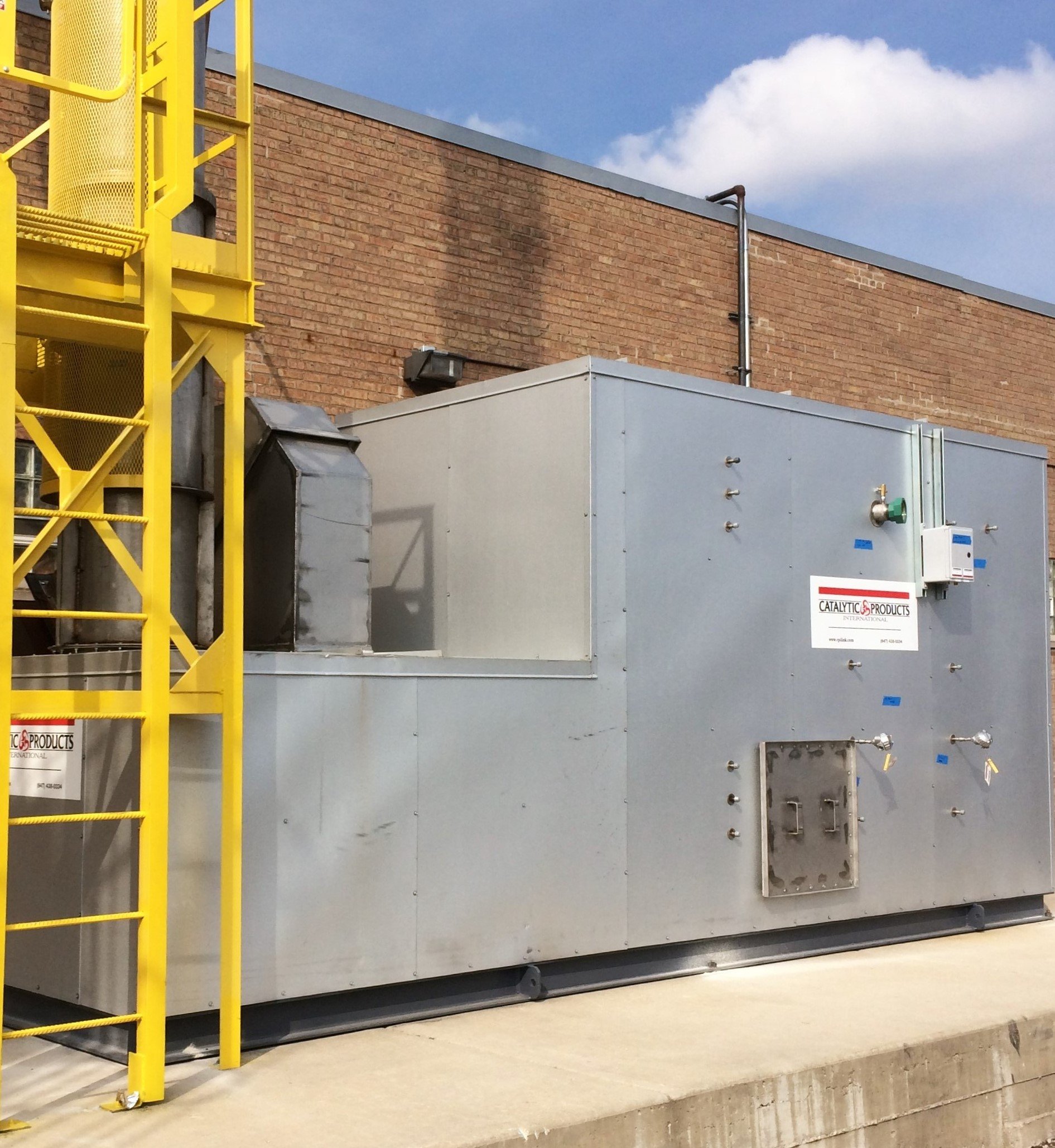
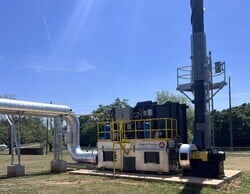
Catalytic Products International (CPI) designed, supplied, and installed a 4,000 SCFM TRITON 4.95 Regenerative Thermal Oxidizer (RTO) for a Southeastern USA industrial textile manufacturer to control Volatile Organic Compounds (VOCs) emissions generated from a single-end dip coater process.
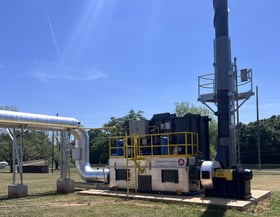
- Process Type: Dip Coating
- VOC: Isocyanate
- Process Air Volume: 4,000 scfm
- Control Type: Regenerative Thermal Oxidizer (RTO)
- Destruction Rate of Efficiency (DRE): 98%
- Installation: RTO, stack, fans, and turnkey installation
Solution Provided
The new 4,000 SCFM Regenerative Thermal Oxidizer (RTO) was installed to replace an older oxidizer which had reached the end of its useful life. Due to the deteriorating condition of the internal structure, upgrading or repairing the existing RTO was not a viable long‑term solution. After conducting a thorough inspection of the existing oxidizer, CPI recommended a full replacement.
Project Scope
CPI provided a turnkey oxidizer package that included:
- TRITON 4.95 RTO installed on a customer‑supplied concrete pad
- Insulated booster fan
- RTO exhaust stack
- Startup and commissioning technical support
CPI coordinated closely with the customer’s engineering, environmental, and operations teams to ensure proper design parameters, seamless integration, full regulatory compliance, and a smooth transition to the new emissions control system with minimal production disruption.
CPI’s Preventative Maintenance Services
With proper maintenance and support, CPI Regenerative Thermal Oxidizers (RTOs) routinely deliver 20+ years of dependable performance, and many continue operating efficiently well beyond that. Because RTOs are essential to maintaining clean, compliant production, proactive maintenance is critical.
Regular service helps facilities stay ahead of regulatory requirements, avoid unplanned downtime, and prevent costly equipment failures. Addressing wear, damage, and unexpected hazards early can save hundreds of thousands of dollars in lost production and capital replacement.
Sustaining peak RTO performance requires continuous monitoring by qualified, experienced technicians. CPI goes beyond delivering innovative air pollution control systems, offering customized maintenance programs and aftermarket services designed to prioritize:
- Safety
- Regulatory Compliance
- Long-term ROI
How the RTO Works
The RTO thermally oxidizes VOCs by exposing them to elevated temperatures, oxygen, and sufficient residence time. In this environment, harmful hydrocarbons convert to carbon dioxide, water vapor, and usable thermal energy. This process ensures clean, compliant exhaust while lowering fuel consumption and operating costs.
During operation, VOC‑laden air enters the first ceramic media heat‑exchange bed, where it is preheated before entering the combustion chamber. After oxidation occurs, the clean gas passes through a second ceramic bed, transferring heat back into the system before discharge.
This regenerative cycling enables:
- High thermal energy recovery
- Reduced natural gas usage
- Stable destruction efficiencies
- Lower operating costs compared to other oxidizer types
About CPI
Since 1969, CPI has been “Enabling Clean Production™” by delivering innovative, cost‑effective solutions for VOC, HAP, NOx, and odor control. CPI’s systems support customers across industries—including adhesives, coatings, chemicals, and more—in achieving air quality compliance while minimizing energy consumption and greenhouse gas emissions.
CPI partners with manufacturers as a trusted resource in resolving the most complex air pollution and energy conservation problems. We provide our customers with innovative and cost-conscious solutions to their most complex VOC, NOx, and Odor pollution challenges.
Oxidizer preventative maintenance, service, and support provided by CPI across the Southeast USA including Georgia, Alabama, South Carolina, North Carolina, Tennessee, Kentucky, and Florida.